Top View Realistic Tumbler Mockup: A Practical Evaluation for Designers
In the competitive landscape of branding and product visualization, the difference between a flat design file and a compelling presentation often comes down to context. For professionals seeking to showcase beverage-related artwork, the Top View Realistic Tumbler Mockup offers a specialized solution that addresses the specific challenges of 3D rendering without requiring advanced modeling skills. This resource is designed to bridge the gap between creative concepts and client-ready visuals, providing a high-fidelity environment where designs can be tested against real-world lighting and perspective.
The Core Purpose of Top-Down Visualization
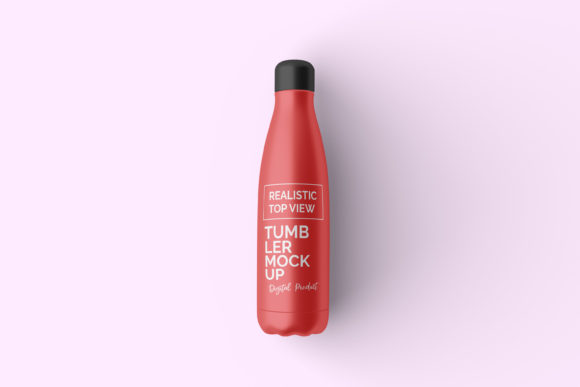
Moving away from traditional side-profile views, a top-down perspective offers a unique aesthetic that emphasizes the opening, rim, and lid interaction of a tumbler. This angle is particularly effective for displaying custom graphics on lids, promotional text around the rim, or complex patterns that wrap around the vessel's circumference. The Top View Realistic Tumbler Mockup leverages this specific viewpoint to create a sense of immersion that standard templates often lack. By simulating a realistic 3D display, it allows users to present their work as if the product were already in production, significantly elevating the perceived value of the design.
The utility of this mockup extends beyond simple aesthetics. It serves as a functional tool for validating design choices before committing to manufacturing. Marketers and entrepreneurs can use these visuals to gauge how colors appear under different lighting conditions, while educators can utilize them to teach students about spatial awareness and surface application. The ability to visualize a product from above helps stakeholders understand the user experience of holding and using the item, which is a critical factor in consumer engagement.
Technical Specifications and Workflow Integration
At the heart of this asset's effectiveness lies its technical construction. Available in PSD Photoshop format, the mockup utilizes smart-object technology to streamline the editing process. This feature is not merely a convenience; it is a fundamental component of a professional workflow. Users can replace the current designs with their own artwork within seconds, eliminating the need for manual layer masking or complex warping techniques that often introduce distortion.
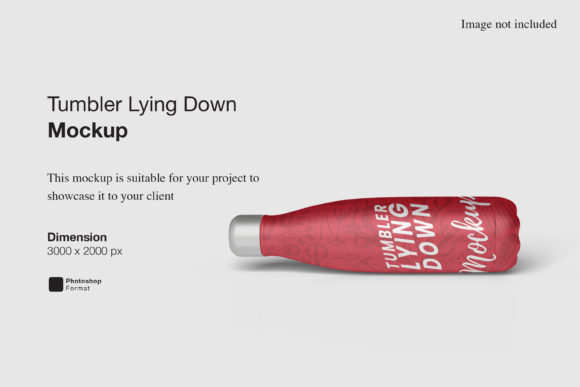
- Resolution and Clarity: With a canvas size of 3000x2000 pixels at 300 dpi, the output is suitable for both high-resolution web displays and print-quality marketing materials. This ensures that fine details in logos or intricate illustrations remain crisp and legible.
- Background Flexibility: One of the standout features is the capability to change the background color. This allows designers to test their tumbler designs against various environments, from neutral studio settings to vibrant brand-matched backdrops, ensuring consistency across different platforms.
- User Guidance: The inclusion of a PDF help guide provides essential support for those less familiar with Photoshop's smart objects. This documentation reduces the learning curve, making the tool accessible to freelancers and small business owners who may not have extensive graphic design training.
Evaluating Real-World Performance and Quality
When analyzing the quality of the Top View Realistic Tumbler Mockup, the primary metric is realism. In the realm of digital assets, "fake" lighting or inconsistent shadows can immediately undermine a designer's credibility. This mockup aims to replicate natural light interactions, casting subtle reflections on the tumbler's surface and creating depth that draws the viewer's eye. The result is an image that feels tangible rather than purely digital.
However, the effectiveness of any mockup depends on the source material provided by the user. While the template handles the geometry and lighting, the final output is only as good as the design applied to it. Professionals should ensure their vector files are optimized for the dimensions of the smart object to prevent pixelation. Additionally, understanding the limitations of the top-down view is crucial. While excellent for lid designs and top-surface graphics, this angle may not fully capture the curvature of the side walls, necessitating a complementary side-view mockup for comprehensive product showcases.
Ideal Use Cases and Target Audience
This resource is particularly valuable for a diverse range of users. For freelance designers, it acts as a time-saving asset that accelerates the delivery of portfolio pieces. Instead of spending hours rendering 3D models, they can focus on refining the artwork itself. Entrepreneurs and small business owners benefit from the ability to create professional marketing collateral without hiring expensive 3D artists. They can quickly generate images for crowdfunding campaigns, social media ads, or e-commerce listings.
Marketers and content creators will appreciate the speed at which they can produce variations for A/B testing. By swapping out background colors and applying different design iterations, teams can determine which visual approach resonates best with their audience. Educators and publishers can use the mockup to illustrate case studies or create instructional content regarding packaging design and brand identity.
Practical Recommendations and Considerations
To maximize the return on investment from this tool, users should adopt a systematic approach. Start by organizing your design layers logically before importing them into the smart object. This practice prevents confusion when managing multiple revisions. Furthermore, take advantage of the high resolution by preparing assets that meet the 300 dpi requirement from the outset. Scaling up low-resolution images after import will degrade the final quality, negating the benefits of the mockup's precision.
It is important to note that the photos used in preview galleries are for illustration purposes only. Users must rely on their own design inputs to achieve the desired outcome. While the mockup provides a robust framework, it does not replace the need for sound design principles. Colors should be chosen with consideration for the material properties of the tumbler; for instance, metallic finishes require different color handling than matte surfaces. Ignoring these nuances can lead to a disconnect between the digital representation and the physical reality.
Long-Term Value and Adaptability
The longevity of this asset is tied to its flexibility. As design trends evolve, the ability to easily swap backgrounds and apply new color palettes ensures the mockup remains relevant. Unlike static templates that look dated after a season, the Top View Realistic Tumbler Mockup adapts to changing styles through its editable nature. For professionals who prioritize efficiency and reliability, this adaptability translates into significant long-term savings in both time and resources.
In conclusion, the Top View Realistic Tumbler Mockup stands out as a practical and efficient tool for anyone involved in product visualization. Its combination of high resolution, smart-object functionality, and versatile background options makes it a strong candidate for professional workflows. While it requires a basic understanding of Photoshop to unlock its full potential, the payoff in terms of presentation quality and time efficiency is substantial. Whether you are launching a new brand, updating a portfolio, or teaching design concepts, this mockup provides a reliable foundation for creating impactful visual content.