Mastering Professional Presentation with a Credit Card Mockup
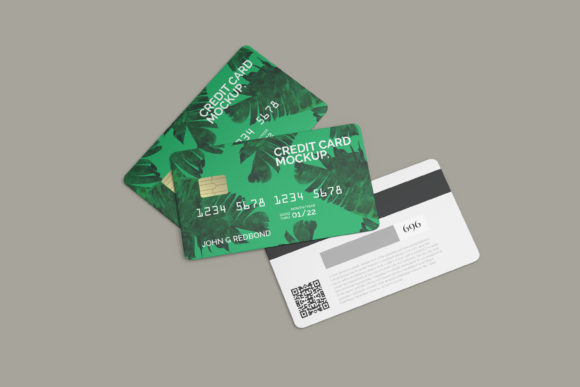
In the competitive landscape of digital design and branding, the difference between a good idea and a successful product often lies in how it is presented. Professionals, creators, and entrepreneurs frequently face the challenge of visualizing abstract concepts in a tangible way before they ever hit the production line. This is where a Credit Card Mockup becomes an indispensable asset. It serves as more than just a visual aid; it is a strategic tool that bridges the gap between raw design files and realistic client expectations. By utilizing a high-quality mockup, designers can showcase their work in a realistic 3D display, ensuring that every curve, shadow, and texture reflects the final physical reality.
The core value of this tool lies in its ability to streamline the creative workflow. When you are working on a project involving payment solutions, loyalty programs, or premium membership cards, you need to communicate the scale, material finish, and overall aesthetic to stakeholders quickly. A standard flat image often fails to convey depth or texture. In contrast, a well-constructed mockup allows for immediate visualization of the design in context. This capability is crucial for decision-making processes, whether you are pitching to a client, presenting to a marketing team, or finalizing specifications for a manufacturer.
Integrating Smart Objects into Your Design Workflow
The technical efficiency of a modern Credit Card Mockup is defined by its smart-object features. Available in PSD Photoshop format, these files are engineered to reduce friction in your daily routine. The primary advantage is the ability to replace designs easily and quickly. Instead of manually resizing, repositioning, or adjusting layer masks for every new card design variation, you can simply double-click the designated smart object layer.
This process transforms hours of manual editing into seconds of execution. Once you open the smart object, you paste your own artwork, save the changes, and watch the main file update automatically. The lighting, shadows, reflections, and perspective adjustments remain intact, preserving the integrity of the 3D display while swapping out the content. This level of automation is vital for professionals who need to iterate rapidly. For instance, a marketer might need to present five different color variations of a corporate card to a board of directors. With a smart-object-based mockup, this task shifts from a tedious graphic design chore to a quick configuration step, allowing you to focus on strategy rather than pixel-pushing.
Streamlining the Creative Process
The integration of this tool fits seamlessly into various stages of a project lifecycle. During the initial planning phase, you can use the mockup to validate design choices. Does the logo look balanced on the front? Is the chip placement ergonomic and visually appealing? By testing these elements in a realistic 3D environment early on, you avoid costly errors later in the production cycle. It acts as a form of quality control, ensuring consistency across all deliverables.
During the execution phase, the mockup serves as a communication bridge. When collaborating with developers or print vendors, providing a flat vector file can lead to misinterpretation. Sharing a rendered mockup ensures everyone is aligned on the visual outcome. It clarifies the intent behind the design, reducing the back-and-forth emails that often delay project timelines. Furthermore, for freelancers and small business owners, having a polished presentation ready instantly enhances professionalism. It signals to clients that you understand not just the design, but the end-user experience and the physical product.
Technical Specifications and Compatibility Considerations
To maximize the utility of a Credit Card Mockup, understanding its technical specifications is essential. High-resolution output is non-negotiable for professional presentations. This specific item offers a size of 3000x2000 pixels at 300 dpi. This resolution ensures that when you export images for web portfolios, social media campaigns, or high-quality print materials, the graphics remain crisp and sharp. There is no risk of pixelation or blurriness, which can undermine the credibility of your brand.
Another critical feature is the changeable background-color option. Real-world scenarios rarely involve a single, static backdrop. You may need to show a credit card against a dark leather wallet, a bright white desk, or a gradient background that matches your company's brand identity. The flexibility to alter backgrounds without losing the realism of the card allows for dynamic storytelling. It enables you to tailor the visual context to the specific message you are conveying. Whether you are highlighting luxury through a dark, moody setting or emphasizing clarity and trust with a clean, light background, the mockup adapts to your needs.
It is important to note that while the photos used in preview illustrations are not included, they serve as a guide for what is possible. Users must rely on the provided structure to create their own unique scenes. This separation ensures that the mockup remains a versatile template rather than a fixed image. However, users should be aware of software compatibility. Since the file is in PSD format, it requires Adobe Photoshop or compatible software that supports smart objects. For those in organizations using cloud-based design tools, this might require a conversion step or a local installation, so planning for software access is part of the preparation process.
Organizing Assets for Long-Term Efficiency
Efficiency is not just about speed; it is about organization. When managing multiple projects, keeping your mockup files structured is key. Create a dedicated folder for your design assets, including the master mockup file, your source logos, and any auxiliary textures. Before starting a new project, review the help guide provided in PDF format. These guides often contain shortcuts and best practices that experienced users have discovered over time. Skipping this step can lead to confusion, especially if you are new to working with smart objects.
Consistency is another factor that impacts long-term use. If you plan to use this mockup for a series of products, ensure that you maintain the same lighting angles and camera perspectives across all variations. Changing the angle too frequently can make your portfolio look disjointed. By sticking to a consistent style, you build a cohesive visual language that reinforces your brand identity. This approach is particularly useful for educators and bloggers who create tutorials or case studies. They can produce a series of high-quality images that look uniform, making their content easier to consume and more authoritative.
Practical Applications Across Industries
The versatility of a Credit Card Mockup extends far beyond the financial sector. Entrepreneurs launching fintech startups use these visuals to pitch investors who may never see the actual plastic card during the meeting. Marketers utilize them for advertising campaigns, creating compelling ad creatives that stop the scroll. Freelance designers incorporate them into their portfolios to demonstrate their ability to handle real-world constraints like embossing, foil stamping, and rounded corners.
For hobbyists and productivity-minded users, the mockup offers a low-barrier entry into professional-grade presentation. You do not need expensive photography equipment or a studio setup to achieve a polished look. The 3D rendering handles the complex lighting physics that would otherwise take days to set up. This democratization of quality allows individuals to compete with larger agencies on a level playing field. It empowers small business owners to create professional-looking brochures, business cards, and promotional materials without breaking the budget.
When implementing this tool, always consider the end goal. Are you designing for a mobile app interface where the card is displayed digitally? Or is it for a physical print run? While the mockup provides a realistic 3D display, remember that the final output depends on the medium. Ensure that the colors in your design file match the intended print profile if you are moving to physical production. The mockup helps visualize the result, but accurate color management remains the responsibility of the designer.
Conclusion: Elevating Your Visual Communication
In summary, integrating a Credit Card Mockup into your workflow is a practical decision that yields significant returns in terms of time saved and quality improved. It addresses the common pain points of visualization, iteration, and presentation. By leveraging smart-object features, high-resolution outputs, and customizable backgrounds, you gain the flexibility to adapt to any project requirement. Whether you are a seasoned professional refining a brand identity or a newcomer showcasing your first project, this tool provides the foundation for clear, effective, and professional communication. Embrace the process, organize your assets wisely, and let the mockup do the heavy lifting so you can focus on the creativity that drives your success.