Elevating Visual Identity Through Realistic 3D Number Rendering in Modern Design Workflows
In an era where digital attention is the most scarce resource, visual communication must be immediate, impactful, and aesthetically superior. For professionals, creators, entrepreneurs, and marketers, the difference between a standard graphic and a premium brand asset often lies in the details. One such detail that has gained significant traction in recent design trends is Realistic 3D Number Rendering. This technique moves beyond flat typography, introducing depth, texture, and lighting to numerical data, transforming simple digits into compelling visual anchors.
This article explores the significance of realistic 3D number rendering, its application in contemporary branding, and how high-quality assets—such as luxury PSD mockups—empower designers to create standout content. We will examine why this trend is not merely a stylistic choice but a strategic response to evolving consumer expectations for polished, tangible digital experiences.
The Evolution of Numerical Typography
Numbers are ubiquitous in design. They appear in pricing strategies, statistical infographics, countdown timers, social media metrics, and award badges. Historically, these elements were treated as secondary to headlines or body copy. However, the rise of isometric and shiny aesthetic trends has shifted this paradigm. Today, numbers are often the hero of the composition, requiring a level of sophistication that flat design cannot provide.
Realistic 3D number rendering addresses this need by simulating physical properties. By applying materials like gold, chrome, or glossy plastics, designers can evoke feelings of value, prestige, and reliability. This is particularly relevant in industries such as finance, luxury retail, and technology, where trust and quality are paramount. When a user sees a golden, three-dimensional "5-Star" rating or a shiny "99%" discount badge, their brain processes it differently than a flat yellow star or red text. The realism triggers a subconscious association with physical quality, enhancing the perceived value of the offer.
Why Professionals Are Adopting 3D Number Mockups
The shift toward 3D elements is driven by several factors, including advancements in software capabilities and changing user preferences. Here is why realistic 3D number rendering has become a staple in modern creative workflows:
- Enhanced Engagement: In a crowded social media feed, motion and depth capture the eye faster than static, two-dimensional graphics. Even static images with strong 3D cues stand out more effectively.
- Brand Differentiation: As many brands adopt minimalist flat designs, incorporating luxurious 3D elements allows a company to distinguish itself as premium or innovative.
- Emotional Connection: Textures like brushed metal or reflective glass convey specific emotions. Gold suggests wealth and exclusivity, while vibrant, colorful 3D shapes suggest playfulness and creativity.
- Versatility Across Media: Whether for web banners, print advertisements, or app icons, 3D numbers add a layer of polish that translates well across various formats.
Understanding High-Quality Digital Assets
For designers to achieve professional results, the source material matters immensely. Low-resolution or poorly rendered assets can look artificial and detract from the overall design. This is where specialized digital products, such as Luxury PSD 3D Numbers, come into play. These assets are engineered to provide maximum flexibility and visual fidelity.
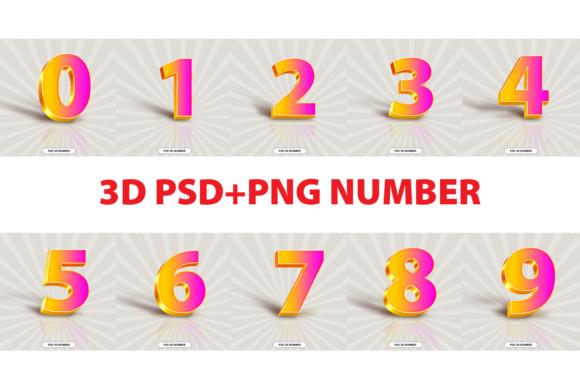
A premium set of 3D number mockups typically includes ten high-quality files, each meticulously crafted. Key features of these professional-grade assets include:
- High Resolution (300 DPI): Ensuring crisp output for both digital screens and high-quality print materials.
- Background Removal: Each mockup comes without a background, allowing seamless integration into any design layout.
- Smart Object Compatibility: Utilizing Photoshop CS4 and above, these files feature smart layers. This allows designers to place their own PNG designs or text directly onto the 3D surface via a smart object, automatically adapting to the perspective and lighting of the number.
- Format Variety: Access to both PSD files for editable work and JPG/PNG formats for quick insertion ensures compatibility with diverse workflow requirements.
By using these pre-rendered, watermark-free assets, creators save hours of modeling time while achieving a level of photorealism that would be difficult to replicate from scratch. The result is a polished, professional look that elevates the entire project.
Practical Applications in Business and Marketing
The utility of realistic 3D number rendering extends across multiple sectors. Let us explore some practical examples where these assets drive results:
1. E-Commerce and Retail Promotions
In online retail, conversion rates are heavily influenced by visual clarity and appeal. A "Buy One Get One Free" offer might use a bold, golden 3D "2" to draw attention. Similarly, flash sales often utilize countdown timers with shiny, metallic numbers to create a sense of urgency and premium value. The interplay of light and shadow on these numbers makes the offer feel tangible and exciting.
2. Financial and Tech Presentations
For entrepreneurs and marketers presenting growth metrics, flat charts can sometimes feel dry. Incorporating 3D rendered numbers into slide decks or website headers adds a layer of dynamism. Imagine a dashboard showing "100% Growth" where the "100" is rendered in sleek, silver chrome. This visual metaphor reinforces the idea of solid, robust performance.
3. Social Media Content Creation
Freelancers and content creators constantly battle for visibility on platforms like Instagram, LinkedIn, and TikTok. Custom 3D numbers for milestones (e.g., "10K Followers") serve as excellent engagement tools. These assets allow creators to celebrate achievements with a style that matches their brand identity, whether that is playful and colorful or serious and corporate.
4. Award Badges and Certifications
Websites often display trust signals through badges. A "Top Rated" seal featuring a 3D golden star or number stands out more than a flat icon. The realistic rendering implies that the award is substantial and earned, boosting consumer confidence.
Integrating 3D Elements into Your Workflow
Adopting realistic 3D number rendering does not require advanced knowledge of 3D modeling software like Blender or Cinema 4D. By leveraging PSD mockups with smart objects, designers can integrate these elements quickly and efficiently. Here is a streamlined approach to using these assets:
- Select the Right Asset: Choose a number style that aligns with your brand’s color palette and tone. Is it a colorful, playful shape or a shiny, golden render?
- Open in Photoshop: Load the PSD file. Locate the smart object layer indicated in the layer panel.
- Insert Your Design: Double-click the smart object thumbnail. Place your PNG text or graphic inside this new window. Save and close the smart object window.
- Refine and Position: The design will now appear mapped onto the 3D number. Adjust the scale, rotation, or blending mode if necessary to ensure it looks natural within the lighting environment.
- Export: Save your final composite as a high-resolution JPG or PNG for web or print use.
This workflow reduces production time significantly while maintaining high artistic standards. It empowers even non-specialist designers to produce work that rivals custom 3D renders.
The Future of Visual Communication
As technology advances, the line between digital and physical visuals continues to blur. With the proliferation of augmented reality (AR) and virtual reality (VR), 3D elements are becoming increasingly important. While current web browsers do not fully support interactive 3D for all users, the demand for immersive visuals is growing. Starting to incorporate realistic 3D aesthetics, such as 3D number rendering, prepares brands for this future state.
Furthermore, as AI-generated content becomes more common, human-curated, high-fidelity design assets will remain valuable. A well-crafted 3D mockup provides a unique texture and lighting signature that AI can sometimes struggle to replicate authentically. Therefore, investing in high-quality, editable assets like luxury PSD number sets is a strategic move for long-term brand consistency.
Conclusion
Realistic 3D number rendering is more than a fleeting trend; it is a reflection of the audience's desire for richer, more engaging visual experiences. For professionals and businesses, integrating these elements into marketing materials, websites, and presentations can significantly enhance brand perception and user engagement.
By utilizing high-quality resources—such as sets of ten luxury PSD 3D numbers with smart layers—designers can effortlessly elevate their projects. These assets offer the perfect balance of ease of use and professional output, enabling creators to focus on strategy and messaging rather than technical hurdles. In a competitive digital landscape, the extra dimension provided by 3D rendering can be the key differentiator that captures attention and drives action.
Whether you are a freelancer looking to spice up your portfolio, a marketer aiming to boost click-through rates, or an entrepreneur building a luxury brand, exploring the potential of realistic 3D typography is a worthwhile investment. Embrace the depth, shine, and realism that these tools offer, and watch your visual communications transform from ordinary to extraordinary.