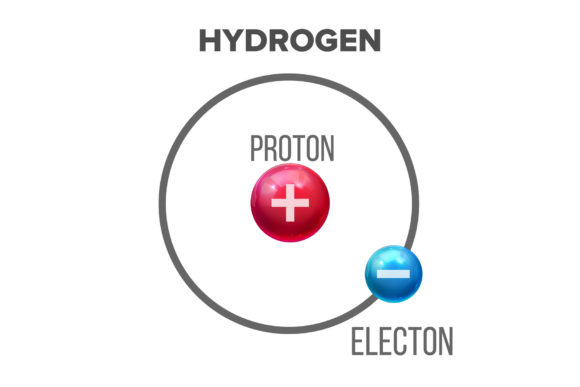
Bohr Model of Scientific Hydrogen Atom
When you look at the intersection of hard science and visual design, few concepts are as instantly recognizable or as visually striking as the Bohr Model of the Hydrogen Atom. It is not merely a diagram found in high school textbooks; it is a powerful aesthetic symbol that communicates precision, fundamental structure, and the elegance of natural laws. For designers, brand strategists, and content creators looking to inject a sense of intellectual authority or scientific curiosity into their projects, understanding the visual language of this model is crucial. Whether you are working on packaging design for a biotech startup, creating social media graphics for an educational platform, or developing a brand identity for a research institute, the imagery associated with the hydrogen atom offers a versatile toolkit for storytelling.
The core appeal lies in its simplicity and geometric perfection. At its heart, the model presents a central nucleus—typically depicted as a dense cluster of protons and neutrons, though for hydrogen, it is just a single proton—surrounded by an electron orbiting in a defined path. This circular motion creates a dynamic tension between stability and energy. In a realistic 3d illustration, this translates to smooth, glossy surfaces that catch light, suggesting high-quality materials like polished metal or translucent glass. The contrast between the dark void of space and the bright, energetic particles makes for compelling visual hierarchy, guiding the viewer’s eye naturally from the center outward. This inherent structure allows for easy integration into various layouts, providing a focal point that anchors more complex information around it.
Visual Characteristics and Material Design Composition
To truly leverage the Bohr Model in your creative work, you must understand its material composition and stylistic nuances. Modern interpretations often move away from flat, two-dimensional line drawings toward rich, tactile representations. A premium font or graphic asset featuring this model will likely emphasize depth, shadow, and texture. Think of the nucleus not just as a red dot, but as a textured sphere with subtle imperfections that suggest atomic weight and density. The electron, meanwhile, might be rendered as a streak of light or a sharp, metallic orb, emphasizing speed and charge.
The color palette is equally significant. Traditional depictions use primary colors: red for protons, blue for electrons, and neutral grays or whites for neutrons. However, contemporary modern typography and design trends allow for more sophisticated palettes. Deep blues and purples can evoke mystery and the quantum realm, while neon accents can suggest energy and innovation. When evaluating assets, look for those that offer flexibility in color schemes. A good set of design assets will provide vector layers (EPS) that allow you to recolor components without losing resolution, ensuring your final output remains crisp whether printed on a business card or projected on a large screen.
The "personality" of this visual style is one of clarity and order. It rejects chaos in favor of structured logic. This makes it particularly effective for brands that want to communicate reliability and expertise. If you are designing for a fintech company, the precision of the atom suggests accurate calculations. For a health tech firm, it implies a focus on the building blocks of life. The visual language says, "We deal with the fundamentals." This is a strong message in a market saturated with vague promises and buzzwords.
Applications Across Creative and Commercial Projects
The versatility of the Bohr Model extends far beyond academic contexts. Its ability to convey complex ideas through simple geometry makes it a favorite in logo design and editorial design. Consider a pharmaceutical company launching a new drug. Using a stylized hydrogen atom in their logo immediately signals a connection to chemistry and biology without needing explicit text. It serves as a visual shorthand for "science-based solution."
In web design, these illustrations can be used as interactive elements. Imagine a hero section where the electron orbits slowly, responding to mouse movement. This adds a layer of engagement that static images cannot achieve. For bloggers and publishers, using such imagery breaks up text-heavy articles, providing visual relief and reinforcing the topic. In packaging design, especially for products claiming "pure" or "elemental" ingredients, the atom model reinforces the idea of purity and essential composition. It suggests that what is inside is fundamental and unadulterated.
Furthermore, the model works well in creative font pairings and mixed-media projects. While the atom itself is a geometric shape, it can be juxtaposed with organic textures to create contrast. For example, placing a sleek, 3D-rendered atom against a rough, handmade paper background creates a dialogue between the synthetic and the natural. This technique is popular among hobbyists and crafters who blend digital and physical mediums. It also appeals to entrepreneurs in the maker space, bridging the gap between engineering and art.
Evaluating Project Fit and Readability Considerations
Choosing the right visual representation requires careful consideration of your audience and medium. Not all depictions of the Bohr Model are created equal. A highly detailed, photorealistic 3D render might overwhelm a small icon size, whereas a simplified vector version might lack the impact needed for a large banner. When selecting assets, always test them at various scales. Ensure that the key elements—the nucleus and the electron—are distinguishable even when scaled down. This is critical for maintaining readability and visual integrity across different platforms.
Another important factor is the balance between accuracy and abstraction. While scientists may prefer strict adherence to quantum mechanical models, general audiences respond better to the classic planetary model. As a designer, your job is to find the sweet spot. Use the classic Bohr model for broad appeal, as it is universally recognized. Reserve more abstract representations for niche audiences familiar with advanced physics. This approach ensures that your message is accessible without sacrificing credibility.
When integrating these visuals into a broader design system, consistency is key. The style of the atom illustration should match the rest of your brand identity. If your other graphics are flat and minimalist, a hyper-realistic 3D atom might feel out of place. Conversely, if your brand is bold and experimental, a conservative line drawing might seem too rigid. Evaluate how the visual weight of the atom interacts with your chosen typeface. A heavy, bold sans serif font can stand up to a detailed 3D render, while a delicate serif font might need a simpler, thinner line art version of the atom to maintain harmony.
Practical Guidance for Implementation
Before incorporating the Bohr Model into your project, take time to review the included styles and formats. High-quality assets typically come in both JPG for quick previews and EPS or SVG for scalable editing. The EPS format is particularly valuable for commercial font users and designers who need to manipulate individual components. Check if the file includes separate layers for the nucleus, electron, and orbital paths. This level of control allows you to customize the animation or static position to fit your specific layout needs.
Also, consider the licensing terms. If you are using these assets for a commercial product, ensure you have the appropriate rights. Many free resources come with restrictions that prohibit use in logos or merchandise. Investing in a premium asset package often provides greater flexibility and higher quality, which pays off in the long run through professional results. Finally, don't underestimate the power of negative space. The Bohr Model relies on the empty space around the nucleus to define the orbit. Similarly, in your design, give the element room to breathe. Cluttered compositions can dilute the impact of the scientific imagery, making it look busy rather than brilliant.
By thoughtfully integrating the Bohr Model of the Hydrogen Atom into your designs, you tap into a universal symbol of knowledge and structure. It is a tool that, when used correctly, elevates your work from mere decoration to meaningful communication. Whether you are targeting marketers, educators, or tech enthusiasts, the clarity and elegance of this model provide a solid foundation for engaging and professional design outcomes.